With Great Value comes Great Responsibility
The Controversy
Protein quality is a key factor in determining the nutritional adequacy of a dog’s diet. Chicken is one of the most commonly used protein sources in commercial dog food due to its high digestibility and favourable amino acid profile (Cosgrove, 2026). However, alongside lean chicken, manufacturers frequently utilise “chicken by-products,” a term used to describe a wide range of non-muscle chicken components.
Despite their widespread use, chicken by-products remain controversial due to their ambiguous definition and variable composition.
Defining Chicken By-Products
Simply put, according to industry standards, chicken by-products consist of non-muscle parts of slaughtered chicken, including:
-
Organs (liver, heart, kidneys, lungs)
-
Structural components (necks, feet, bones)
-
Internal tissues (intestines, spleen)
These components exclude feathers, faecal matter, and foreign contaminants (AAFCO definition cited in WattsPet, 2026) .
The term “by-products” covers a wide mix of ingredients—from nutrient-rich organ meats to less valuable parts like bones and connective tissue. This wide range makes it hard to judge their overall nutritional quality.
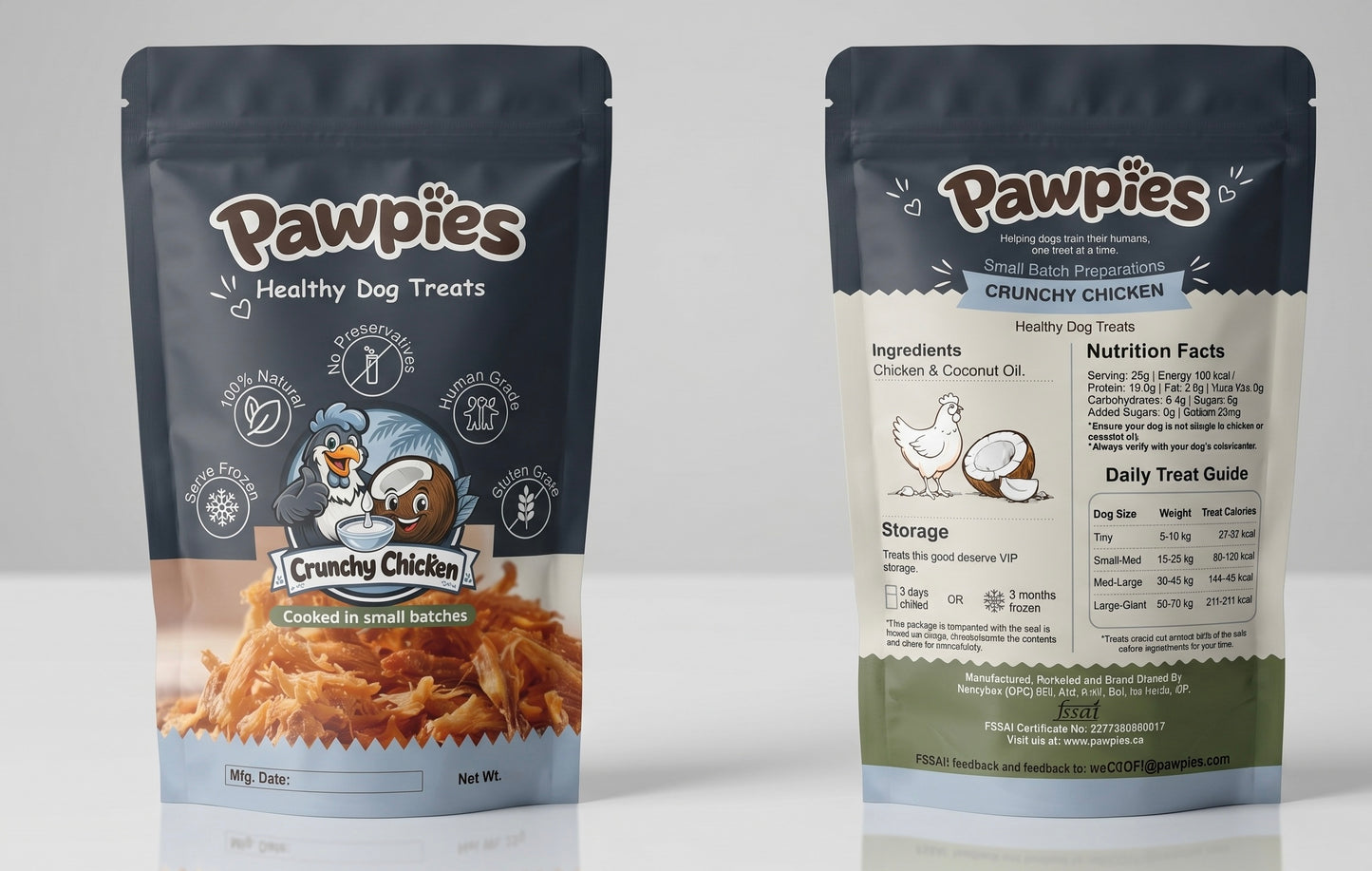
Therefore, to keep things simple and transparent, we at Pawpies only use chicken muscle protein as the main ingredients in our Crunchy Chicken treat.
It's Your Responsibility
Chicken organs definitely bring some great value, as long as they are given in moderation. This is defined based on multiple factors including, breed, weight, age, genetic predisposition, digestive sensitivity and activity levels of your dog. It is your responsibility as a dog parent to ensure that these are not given to your dog to the level of toxicity. However, this cannot be determined by you as the dog food and dog treat industry does not provide complete transparency of the chicken by-products used. Furthermore, the chicken organs added to commercially produced dog food/dog treats are often subjected to high-temperature processing methods used to produce by-product meals for dry pet food. This process can lead to potentially degrading heat-sensitive nutrients including vitamins. Research indicates that processing conditions significantly influence nutrient digestibility and overall quality of by-product-based ingredients (Brands et al., 2025) . High temperatures may also degrade certain amino acids and functional bioactive compounds.
This contrasts with fresh or minimally processed lean chicken, which better preserves nutritional integrity. In contrast, lean chicken used in minimally processed or fresh formulations typically retains higher nutrient integrity. This is why, at Pawpies, we cook our chicken breasts at low temperatures so that each crunchy bite packs all the nutritional goodness your dog deserves.

Contradiction
On one hand, certain components—particularly organ meats—are highly nutritious and biologically appropriate for canine diets. On the other hand, the lack of specificity in labelling introduces uncertainty regarding ingredient quality and composition or potential toxicity due to mixing treats and food between commercially available brands.
When compared to lean chicken, several distinctions emerge:
-
Consistency: Lean chicken provides a predictable nutrient profile; by-products do not.
-
Digestibility: Lean chicken is generally more digestible.
-
Transparency: Lean chicken is clearly identifiable; by-products are not.
-
Processing impact: By-products are more likely to undergo nutrient-altering processing.
Thus, while by-products are not inherently inferior, their aggregated classification reduces reliability as a primary protein source.
Conclusion
Chicken by-products represent a heterogeneous group of ingredients with both nutritional potential and significant limitations. While organ components can contribute valuable nutrients, the lack of transparency, variability in composition, and processing-related concerns present notable disadvantages compared to lean chicken.
From a nutritional and formulation perspective, lean chicken offers a more consistent, digestible, and transparent protein source. Consequently, dietary evaluation should prioritise ingredient specificity and quality over broad classifications such as “by-products.”
References
Brands, L. et al. (2025) Effects of poultry by-product composition and processing on nutrient digestibility and fecal characteristics of dry dog food. Animals. Available at: https://www.mdpi.com
Cosgrove, N. (2026) Beef vs chicken dog food: Pros & cons. Dogster. Available at: https://www.dogster.com
DogFoodDB (2026) Dog food by-products explained. Available at: https://dogfooddb.app
WattsPet (2026) Chicken by-products in dog food: What they actually are. Available at: https://wattspet.com
CyChicken (2025) What is chicken by-products in dog food. Available at: https://cychicken.co
Aldrich, G. (2013) Fillers: Are they incorrectly vilified? Petfood Industry. Available at: https://www.petfoodindustry.com
Allen, M. (2023) What ingredients are used as fillers in dog food? Available at: https://petreader.net
Becker, M. (2018) Myths and truths about ‘fillers’ in pet food. Available at: https://www.drmartybecker.com
Brands, L. et al. (2025) Effects of poultry by-product composition and processing on nutrient digestibility and fecal characteristics of dry dog food. Animals. Available at: https://www.mdpi.com
Jackson, D. (2023) Fillers in dog food: Why you should avoid them. Available at: https://www.allaboutdogfood.co.uk
NutritionRVN (2021) Fillers in pet food – and why they aren’t a thing. Available at: https://nutritionrvn.com
PetMealPlanner Team (2025) The truth about ‘fillers’ in pet food. Available at: https://www.petmealplanner.com
WattsPet (2026) Chicken by-products in dog food: What they actually are. Available at: https://wattspet.com