Understanding What’s Really Inside Your Dog’s Treats
PawPies Crunchy Chicken vs Boutique & Commercial Dog Treats in India
As Indian pet parents become increasingly conscious about canine nutrition, ingredient transparency has emerged as one of the most important factors when choosing dog treats. A growing number of consumers now read ingredient labels carefully, looking beyond marketing claims to understand exactly what they are feeding their dogs.
The Indian dog treat market today can broadly be divided into three categories:
-
Ultra-clean label treats such as PawPies Crunchy Chicken.
-
Boutique-style premium brands that focus on natural ingredients and functional nutrition.
-
Commercial mass-market brands designed for affordability, long shelf life, and large-scale distribution.
While all three categories serve different consumer needs, the differences in ingredient philosophy, processing methods, and transparency can be substantial.
Why Ingredient Simplicity Matters
Veterinary nutrition experts often recommend choosing treats with short, understandable ingredient lists and avoiding unnecessary fillers, artificial additives, and flavouring systems whenever possible. Treats with identifiable protein sources and fewer ingredients can also make it easier for pet parents to monitor food sensitivities and dietary intolerances (The Spruce Pets, 2025).
A simple ingredient panel also provides greater transparency, allowing consumers to understand exactly what is being fed to their pets without deciphering complex formulations.

The Three Approaches to Dog Treat Manufacturing
1. PawPies Crunchy Chicken: A Minimalist Clean-Label Approach
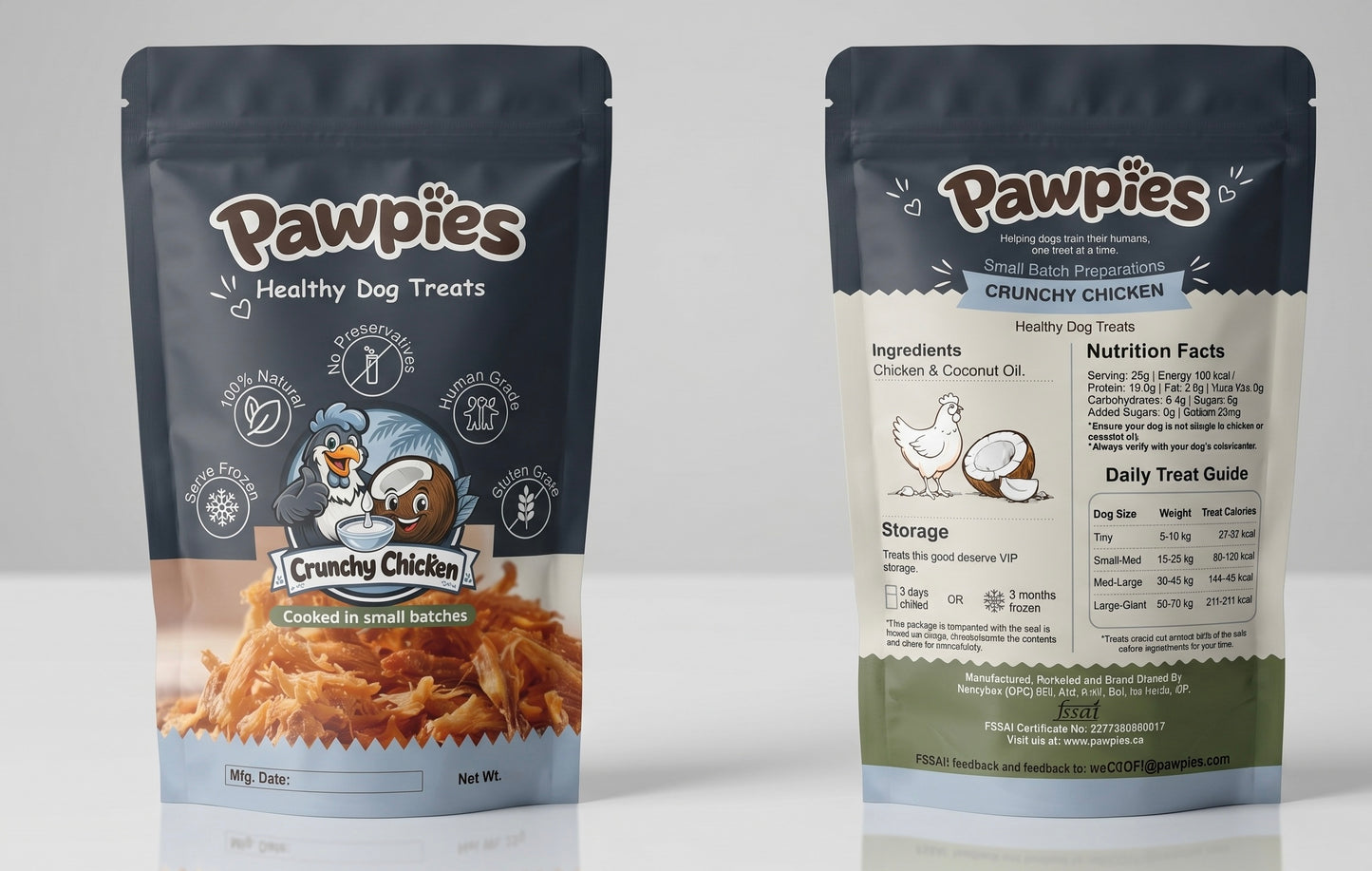
PawPies Crunchy Chicken is positioned around ingredient simplicity.
The formulation contains:
-
Lean Chicken
-
Trace amounts of Coconut Oil
No preservatives, vegetable glycerin, artificial colours, artificial flavours, grains, gluten, fillers, binders, or added sugars are included.
This approach aligns with a growing consumer preference for minimally processed pet treats with short ingredient lists and clear ingredient traceability.
2. Boutique-Style Dog Treat Brands
Boutique brands such as Doggos, Benny's Bowl, Lulu & Daisy, HUFT Sara's Doggie Treats and similar premium labels typically focus on natural ingredients and higher-quality protein sources.
These products often contain:
-
Chicken, liver, quail, fish, or organ meats
-
Fruits and vegetables
-
Functional ingredients such as herbs and botanicals
-
Natural preservatives
-
Moisture-retention ingredients
Many boutique treats remain grain-free and avoid artificial additives. However, they often include additional ingredients intended to improve palatability, functionality, texture, or shelf stability.
One commonly used ingredient in premium soft treats is vegetable glycerin, a humectant that helps retain moisture and maintain a soft texture. While generally considered safe when used appropriately, glycerin primarily serves a functional manufacturing purpose rather than a nutritional one (Watts Pet, 2026; Houndsy, 2025).
3. Commercial Dog Treat Brands
Commercial brands such as JerHigh, Drools, Purepet, Pedigree and similar mainstream products are generally formulated to achieve:
-
Long shelf life
-
Consistent texture
-
Large-scale manufacturing efficiency
-
Lower production costs
These products often contain:
-
Meat meals or animal derivatives
-
Grain-based ingredients
-
Starches and binders
-
Preservative systems
-
Flavour enhancers
-
Moisture-retention agents
While these treats meet the needs of many pet owners seeking affordable everyday options, they typically contain longer ingredient lists and undergo more extensive processing than boutique or clean-label alternatives.

Comparative Analysis
|
Feature |
PawPies Crunchy Chicken |
Boutique Style Brands |
Commercial Brands |
|
Protein Source |
Lean Chicken |
Chicken, Liver, Quail, Organ Meats, Mixed Animal Proteins |
Chicken Derivatives, Meat Meals, Mixed Protein Sources |
|
Number of Ingredients |
2 Ingredients Only |
Typically 3–10 Ingredients |
Typically 10–25+ Ingredients |
|
Ingredient Simplicity |
Extremely Simple |
Moderate |
Low |
|
Coconut Oil |
Trace Amounts |
Usually No |
Usually No |
|
Vegetable Glycerin |
None |
Commonly Used As Natural Humectant |
Frequently Used |
|
Artificial Preservatives |
None |
Generally None |
Commonly Used |
|
Natural Preservatives |
None Added |
Often Present |
Often Present |
|
Artificial Colours |
None |
None |
Often Present |
|
Artificial Flavours |
None |
None |
Often Present |
|
Added Sugars |
None |
Occasionally Present |
Frequently Present |
|
Fillers |
None |
Usually Minimal |
Commonly Used |
|
Wheat |
None |
Usually None |
Frequently Present |
|
Corn |
None |
Usually None |
Frequently Present |
|
Soy |
None |
Usually None |
Frequently Present |
|
Rice / Starches |
None |
Sometimes Present |
Frequently Present |
|
Grains |
None |
Usually Grain-Free |
Often Present |
|
Gluten |
None |
Usually Gluten-Free |
Often Present |
|
Single Protein Source |
Yes |
Sometimes |
Rarely |
|
Digestibility |
Excellent |
High |
Moderate |
|
Sensitive Stomach Friendly |
Excellent |
Generally Good |
Variable |
|
Transparency of Ingredients |
Maximum |
Good |
Limited |
|
Human Readable Ingredient List |
Yes |
Usually |
Rarely |
|
Ingredient Traceability |
High |
Moderate |
Low |
|
Manufacturing Style |
Small Batch Production |
Small Batch Production |
Large Scale Industrial Production |
|
Local Ingredient Sourcing |
Yes |
Sometimes |
Rarely Disclosed |
|
Made In India |
Yes |
Yes |
Yes |
|
Freshness Control |
Small Batch Advantage |
Good |
Variable |
|
Processing Level |
Minimally Processed |
Moderately Processed |
Highly Processed |
|
Nutritional Lab Testing |
Yes |
Varies By Brand |
Usually Internal Testing Only |
|
FSSAI Licensed Facility |
Yes |
Usually Yes |
Yes |
|
Veterinary / Nutrition Compliance |
Lab Verified Nutrition |
Varies |
Varies |
|
Shelf-Life Strategy |
Natural Process |
Often Uses Glycerin-Based Moisture Retention |
Often Uses Preservative Systems |
|
Moisture Retention Additives |
None |
Often Present |
Commonly Present |
|
Protein Density |
Very High |
High |
Moderate |
|
Carbohydrate Content |
Minimal |
Low–Moderate |
Moderate–High |
|
Risk Of Hidden Ingredients |
None |
Low |
Moderate |
|
Suitable For Elimination Diets |
Excellent |
Sometimes |
Rarely |
|
Suitable For Daily Treating |
Yes |
Yes |
Yes |
|
Premium Positioning |
Premium Clean Label Treat |
Premium / Super Premium |
Mass Premium / Mainstream |
|
Best Suited For |
Pet Parents Seeking Maximum Ingredient Purity |
Pet Parents Seeking Natural Functional Treats |
Pet Parents Seeking Affordable Everyday Treats |
The Role of Processing and Shelf-Life
Shelf stability is one of the biggest differentiators between treat categories.
Commercial manufacturers often rely on preservative systems, binders, starches, and moisture-retention ingredients to maintain product consistency across large distribution networks.
Boutique brands frequently use vegetable glycerin and other humectants to maintain softness and extend shelf life without relying heavily on synthetic preservatives (Cremer North America, 2023; Dog Food Advisor, 2024).
In contrast, PawPies Crunchy Chicken relies on a natural drying process and a low-moisture format, eliminating the need for glycerin, binders, or added preservative systems.
Why Small-Batch Manufacturing Appeals to Modern Pet Parents
Small-batch manufacturing has gained popularity because it often enables:
-
Greater ingredient transparency
-
Improved freshness control
-
Shorter ingredient lists
-
Reduced reliance on stabilisers and preservatives
Industry experts note that small-batch production frequently supports the use of fresher ingredients and less intensive processing compared to large-scale industrial manufacturing (Moose Country Pet Treats, 2025).
While small-batch production does not automatically guarantee superior nutrition, it often aligns with the broader clean-label movement that many pet parents seek.

The Simplest Way to Think About It
PawPies Crunchy Chicken
Chicken. Coconut Oil. That's it.
Boutique Brands
Chicken + Functional Ingredients + Natural Preservatives + Moisture-Retention Ingredients
Commercial Brands
Chicken + Fillers + Preservatives + Flavour Systems + Binders + Shelf-Life Enhancers
Final Thoughts
Each category of dog treats serves a different purpose.
Commercial brands provide accessibility and affordability. Boutique brands focus on natural ingredients and functional nutrition. PawPies Crunchy Chicken occupies a unique position by taking ingredient reduction to its logical extreme: a treat made with only lean chicken and trace coconut oil.
For pet parents seeking maximum ingredient transparency, minimal processing, and a label that can be understood at a glance, PawPies Crunchy Chicken represents one of the cleanest ingredient profiles currently available in the Indian dog treat market.
References
Cremer North America (2023) Glycerin – A Common Ingredient in Pet Treats. Available at: https://www.petercremerna.com/glycerin-a-common-ingredient-in-pet-treats/
Dog Food Advisor (2024) Is Glycerin Bad for Dogs? Available at: https://www.dogfoodadvisor.com/red-flag-ingredients/is-glycerin-bad-for-dogs/
Houndsy (2025) Is Vegetable Glycerin Safe in Dog Treats? What Every Pet Owner Needs to Know. Available at: https://houndsy.zendesk.com/hc/en-us/articles/38931137248667-Is-Vegetable-Glycerin-Safe-in-Dog-Treats-What-Every-Pet-Owner-Needs-to-Know
Moose Country Pet Treats (2025) Why Small-Batch Pet Treats Matter. Available at: https://www.moosecountrypettreats.com/blog/why-small-batch-pet-treats-matter
The Spruce Pets (2025) The 8 Best Dog Treats, Taste Tested By Our Own Dogs. Available at: https://www.thesprucepets.com/best-dog-treats-4687079
Watts Pet (2026) Glycerin in Dog Food: Is It Safe? Available at: https://wattspet.com/ingredient-analyzer/ingredients/glycerin/