Tokyo’s Favourite Routine
The One-Hour Ritual: The Weekly Pampering
There’s something deeply grounding about slowing down for your dog—really slowing down. For me, that meant carving out one hour every week just for Tokyo, my European Doberman, where the world paused and it was just the two of us. What started as a simple grooming routine quickly became a ritual of connection, comfort, and care. Science backs what I felt intuitively—regular grooming and touch-based interaction don’t just maintain a dog’s physical health, they play a powerful role in emotional wellbeing, stress reduction, and strengthening the human–animal bond.
The Ritual Itself
Our routine always began in the balcony and somehow ended on the sofa—or more often, with Tokyo sprawled dramatically across it like he owned the place, which he kind of did.
It started with a thorough brushing session. Tokyo loved it. I, on the other hand, was always slightly paranoid about brushing too hard—but research suggests that regular brushing, when done correctly, helps distribute natural oils, remove loose hair, and support skin health without causing harm (PetMD, 2023). More importantly, brushing mimics social grooming behaviours seen in animals, which can be calming and bonding (McGreevy & Boakes, 2011).
Next came his coconut oil massage—his personal favourite. He’d happily lick my oil-covered hands, turning it into a bonus treat. While amusing, this step had real benefits. Coconut oil, rich in medium-chain triglycerides, has been associated with improved skin hydration and mild antimicrobial effects when applied topically (Elliott, 2020). The act of massage itself is equally important—studies show that tactile interaction can reduce cortisol (stress hormone) levels in dogs while increasing oxytocin, the “bonding hormone,” in both dogs and humans (Handlin et al., 2011).
After that, we moved into a gentle wipe-down—either with a warm towel or a baby wipe. This wasn’t just about cleanliness. Routine hygiene practices help reduce allergens, bacteria, and environmental irritants that accumulate on a dog’s coat (American Kennel Club, 2024). It also desensitises dogs to handling, making them more comfortable with touch over time.
Then came the paw care ritual—cleaning, inspecting, and lightly oiling. Paw checks are often overlooked but are critical. Dogs’ paws are constantly exposed to rough surfaces, heat, and debris, making them prone to cracks, infections, and minor injuries (ASPCA, 2023). Regular inspection helps catch issues early while reinforcing trust through gentle handling.
By this point, Tokyo would be fully relaxed—usually on his back, completely surrendered to the moment, soaking in belly rubs and what I can only describe as excessive amounts of “puppy talk.”

More Than Grooming: The Science of Connection
What felt like a simple routine was, in reality, a powerful combination of physical care and emotional enrichment.
Research shows that consistent, positive interaction routines help reduce anxiety and behavioural issues in dogs (Horowitz, 2009). Activities like grooming and massage provide structured, predictable touch, which can be particularly soothing for dogs.
Additionally, the human–dog bond is biologically reinforced through these interactions. Studies have demonstrated that mutual gaze, touch, and vocal interaction increase oxytocin levels in both dogs and their owners, strengthening attachment and emotional security (Handlin et al., 2011).
Even the end of our sessions—whether it was a burst of zoomies or a deep, satisfied nap—had a physiological explanation. Physical touch and relaxation can trigger parasympathetic nervous system responses, promoting rest and recovery (McGreevy & Boakes, 2011).
Where Small Details Matter
Looking back, what made this routine special wasn’t just the steps—it was the intention behind them. Every brush stroke, every paw check, every belly rub was time spent saying, “you matter.”
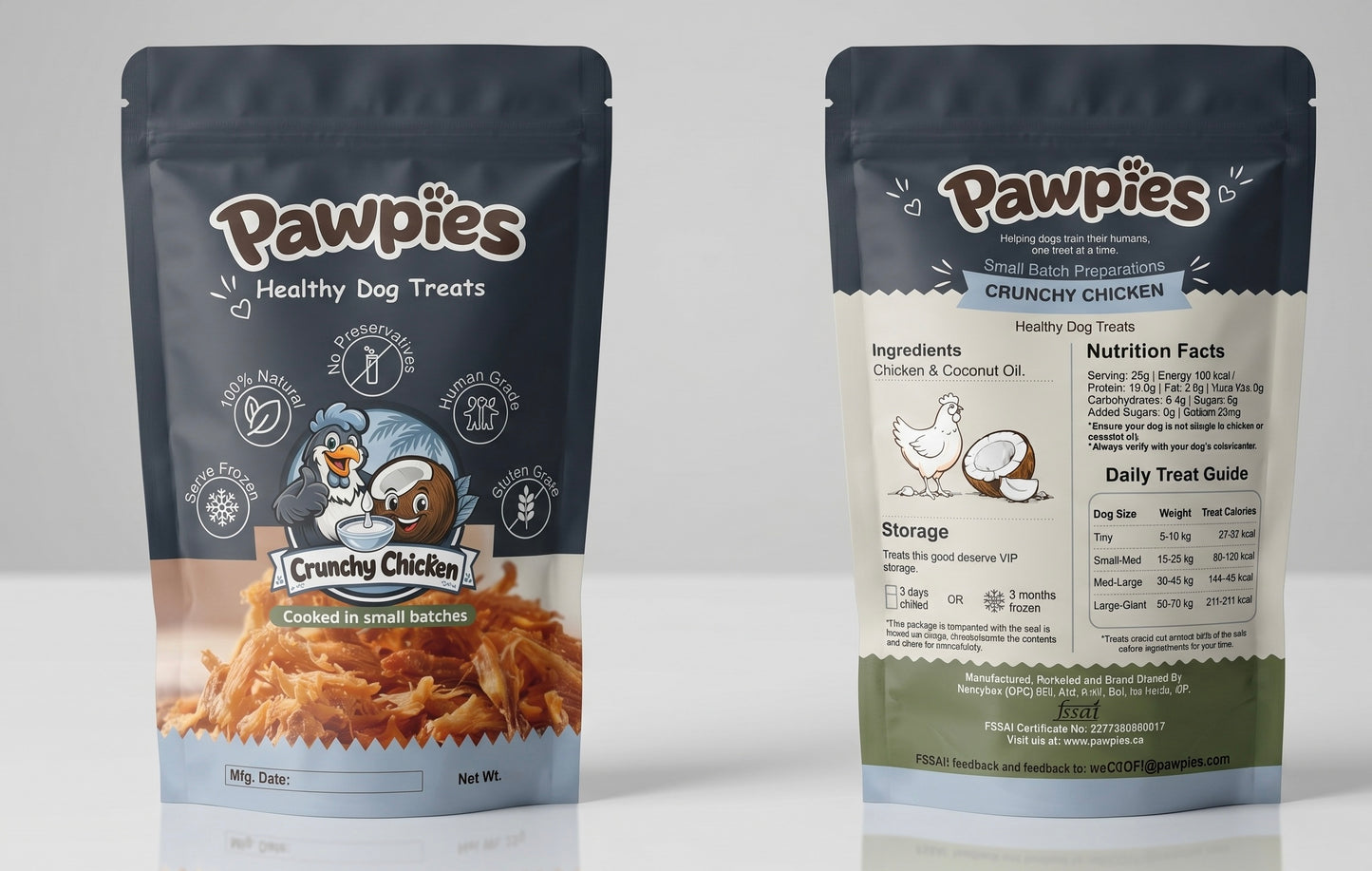
It’s also why, when thinking about what goes into treats and food, I’ve always leaned toward ingredients that serve a purpose. For example, coconut oil—something Tokyo loved licking off my hands—also finds its way, in small, thoughtful quantities, into things like Pawpies Crunchy Chicken and even a touch in peanut butter. Not as a gimmick, but as a functional addition that supports skin health and palatability without overwhelming balance.
Because care isn’t just in what you do—it’s in what you choose.
Conclusion
Tokyo’s weekly pampering routine was never just about grooming—it was about connection, trust, and shared stillness in an otherwise busy world. Science may explain the reduced stress, improved skin health, and strengthened emotional bonds, but what it doesn’t fully capture is the quiet joy of those moments.
For dog parents, the takeaway is simple: you don’t need elaborate routines or expensive products. Just time, consistency, and intention. Because sometimes, the most powerful thing you can give your dog isn’t more—it’s presence.
References
American Kennel Club (2024) Dog Grooming Tips and Benefits.
ASPCA (2023) Dog Care: Grooming and Paw Health.
Elliott, B. (2020) Is Coconut Oil Good or Bad for Dogs? Healthline.
Handlin, L. et al. (2011) ‘Short-term interaction between dogs and their owners: Effects on oxytocin, cortisol, insulin and heart rate’, Anthrozoös, 24(3), pp. 301–315.
Horowitz, A. (2009) Inside of a Dog: What Dogs See, Smell, and Know. Scribner.
McGreevy, P. and Boakes, R. (2011) Carrots and Sticks: Principles of Animal Training. Cambridge University Press.
PetMD (2023) Benefits of Brushing Your Dog Regularly.